Preserving Heritage
Preserving heritage.
In a comment on my previous post, I was asked to explain the process of restoring books. I have written before about paper neutralisation (deacidification) in books. But that is only one of many processes.
In this post, I will try to give a bird’s-eye view of the system, so to speak.
First and foremost, before books can be restored, those in need of restoration must be identified. During circulation – when books are issued to readers and returned – library staff continually check them. If a book is found to need repair, it is sent for restoration.
We should also bear in mind that some books are rarely requested and therefore do not circulate. Statistics suggest that only about 5–10% of a library’s entire collection is requested. The remaining books sit on the shelves for decades.
Inventory checks are used to examine these little-used books. During an inventory, each book is taken off the shelf, checked against the catalogue and assessed to determine whether it needs restoration. Under the applicable standards, a library must inventory one million books a year.
For context, the Lenin Library’s holdings exceeded 126 million items as at 1 January 2024. As homework, you can work out how long a complete inventory would take. For an extra challenge, bear in mind that the Lenin Library’s holdings grew by 262,500 items in 2023.
Documents identified in this way are sent for conservation – the term GOST uses for the process of ensuring the preservation of a document. Conservation is achieved through:
- Maintaining special storage conditions;
- Stabilisation – treatment that slows ageing and prevents damage to the document;
- Restoration – restoring the document’s usability, form and appearance;
- Creating a copy.
Document stabilisation involves 12 different technical processes, including acidity neutralisation (the one I described previously), creating an alkaline reserve, blocking heavy-metal ions, protection against biological damage, disinfection, disinfestation, rodent control, and so on.
Restoration involves 25 different processes. If there is interest, I may write about some of them individually one day.
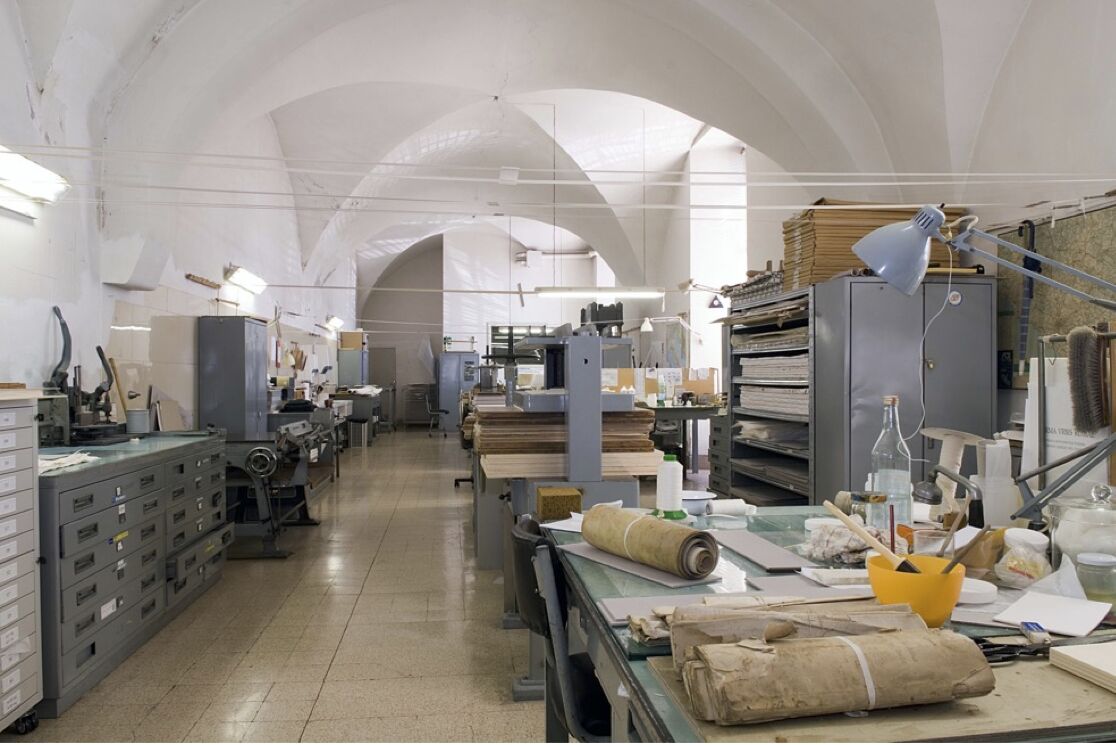
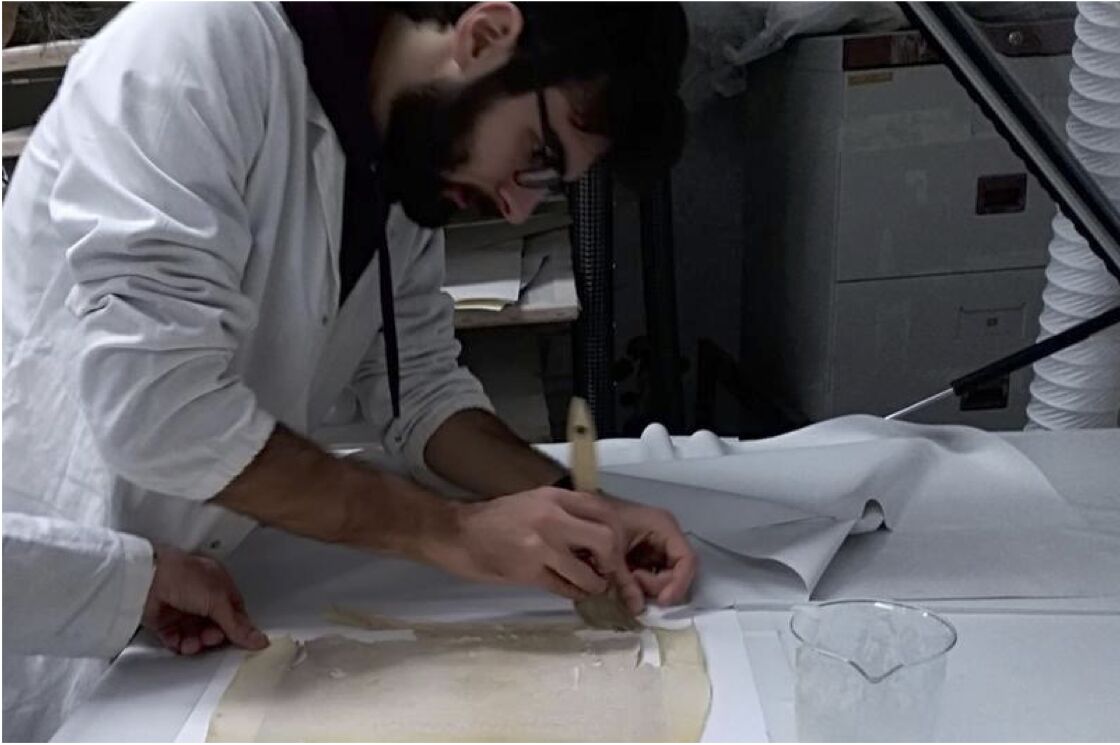
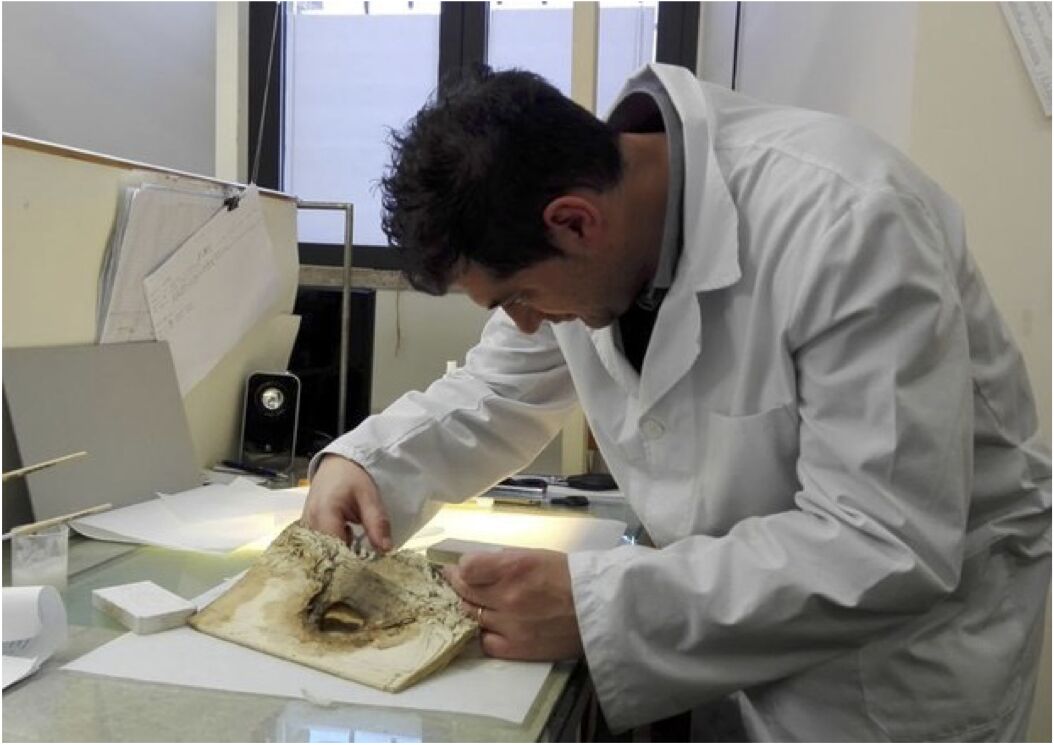
In the photos: the Vatican Library’s restoration workshops, and its staff at work stabilising and restoring documents.