Layers in Digitisation
I’m continuing my series of posts about the Vatican Library…
Here are the previous posts, in case you missed them:
The next challenge library staff face during digitisation can be described in one word: “layers”.
Before paper was invented, books were made from parchment—animal skin. Not only is parchment extremely labour-intensive to produce, it is also an expensive material. Making a single book required slaughtering a herd of around 150 animals. Only very wealthy families could sacrifice an entire herd to have a book made.
How long can you keep reading the same book: a month, two months, a year, a year and a half? Sooner or later, everyone will know it by heart. You want a new book. But that means slaughtering another herd!!
A compromise was often found: a scribe would add new text, pictures, and patterns over the existing text, completely covering the old layer with a new one.
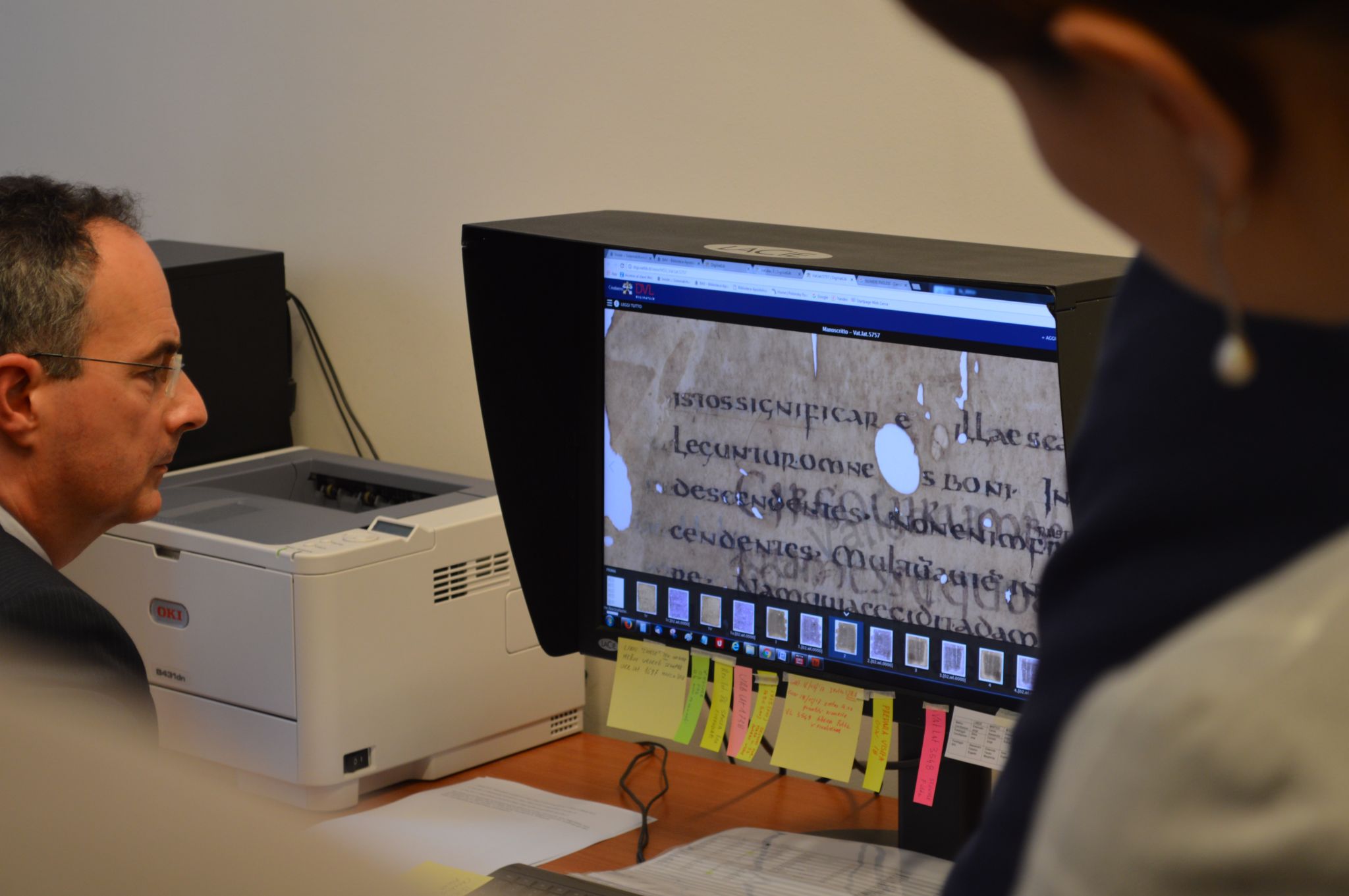
The Vatican Library holds many books with several invisible layers beneath the one we can see. During digitisation, specialists try to make each layer legible. They do this by changing the wavelength of the light used to capture the pages. The images are then processed in specialist software using a range of filters.
One of the photos shows several layers of text displayed on the operator’s monitor. The rest are simply beautiful pictures to catch your attention.