Easter Egg
Shall we have a little fun? Since it’s a day off, here’s an unexpected topic for a post: an Easter egg.
In my final years at university, I got a job as a programmer at a large international company, Paragon Software. I was responsible for developing Hard Disk Manager for Linux, as well as porting the Universal File System Driver (UFSD) to various exotic operating systems.
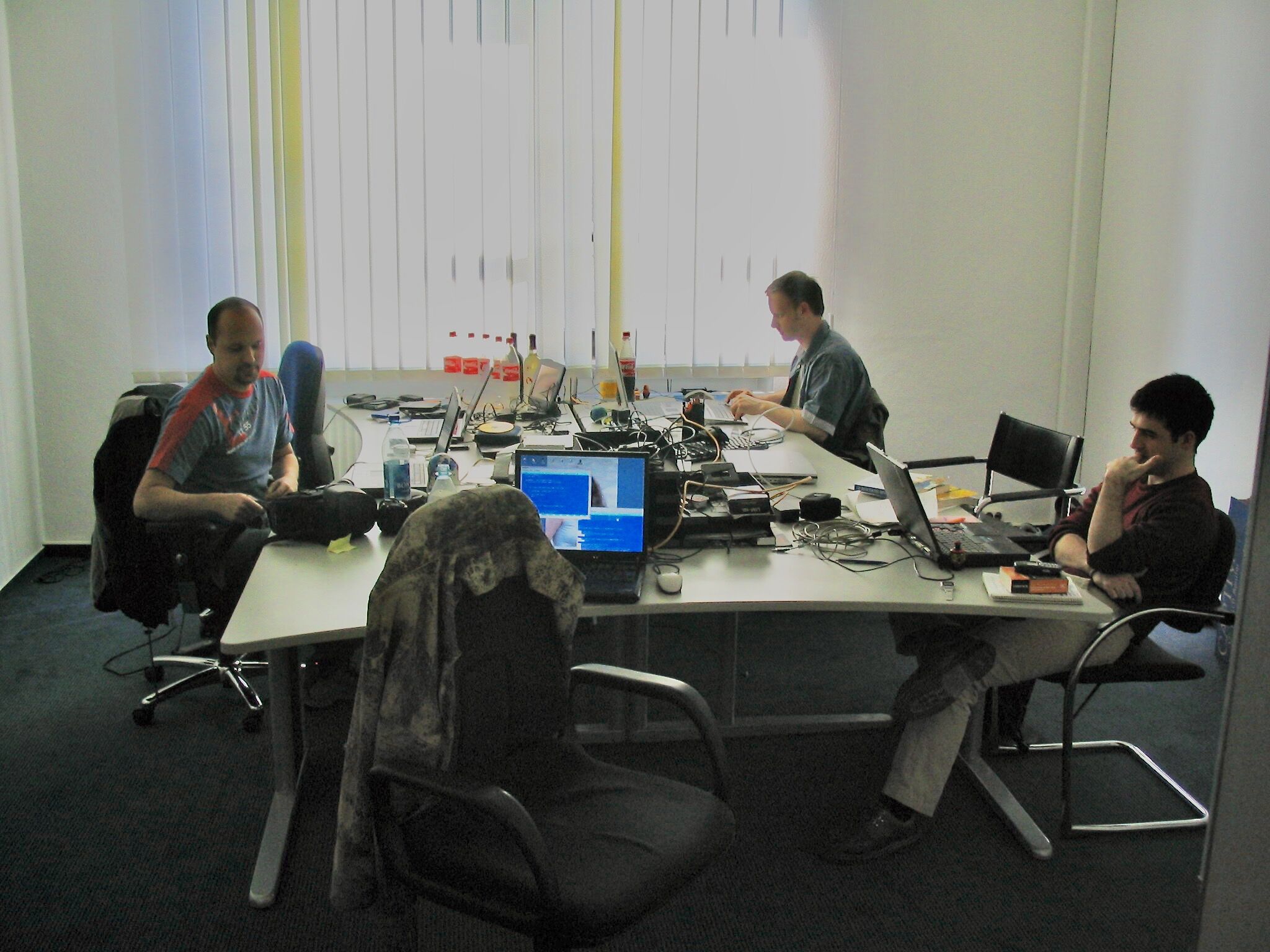
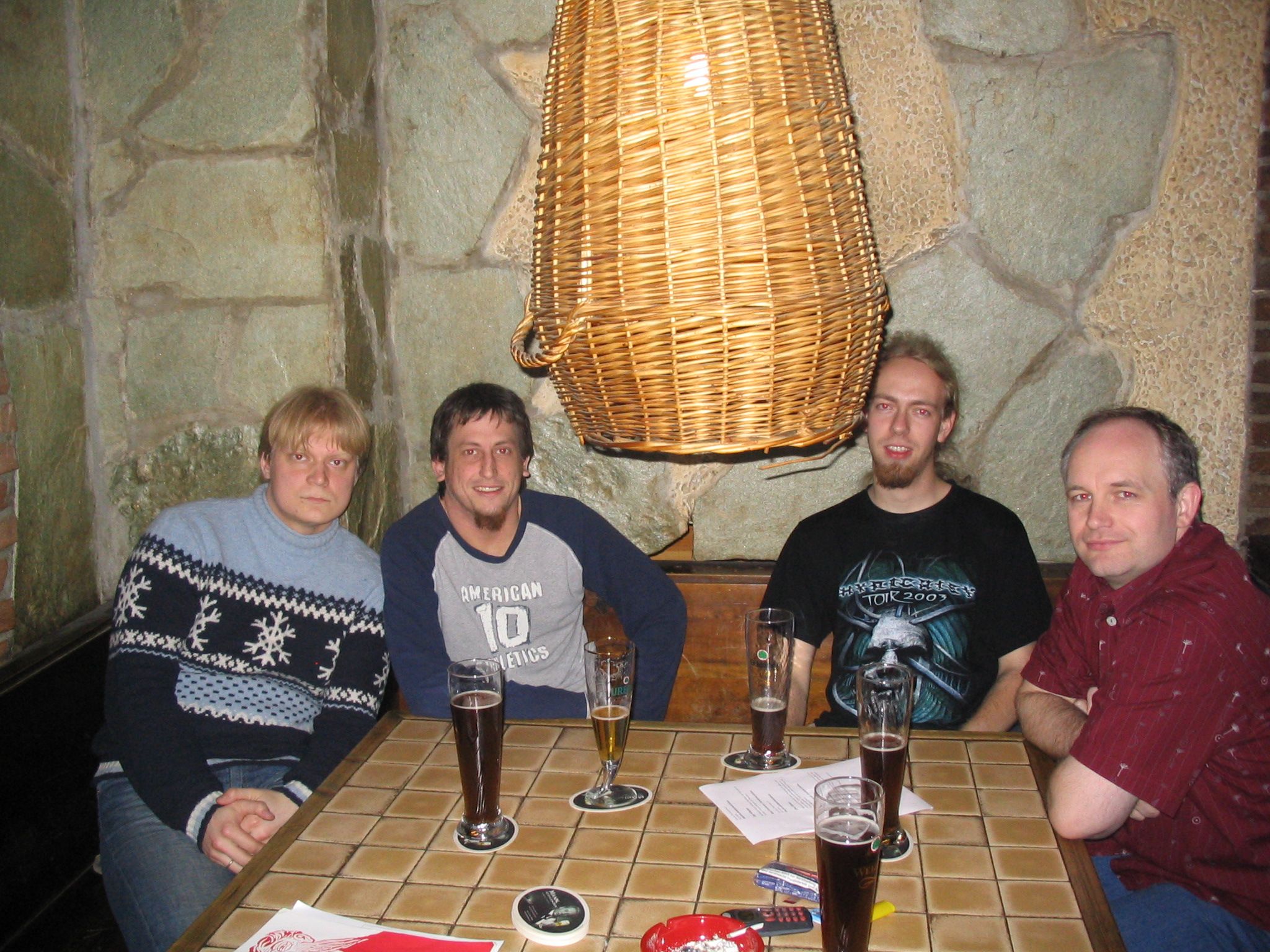
The photo is from my 2005 business trip to the headquarters of YellowTab, which was developing the BeOS-based Zeta operating system at the time. It took me half a day to add NTFS support to the OS, earning Paragon $40,000 from YellowTab. The second photo shows us celebrating with the YellowTab developers at a bar (rather modestly, don’t you think?).
But that’s not the point.
One day, I was asked to design a scripting language compatible with the one used by Paragon’s competitor, PowerQuest’s PartitionMagic, and to write an interpreter for it as well. This was where I really let myself go and packed the language with everything I could think of: conditionals, loops, jump statements, variables, type casting, macros, preprocessor directives, environment variables, and so on and so forth.
You can read the complete language specification here.
But the documentation won’t tell you about the command I secretly built into the interpreter without management knowing. I checked about ten years ago, and it was still there. I doubt my successors failed to appreciate the joke and removed it; in all likelihood, the command is still in the interpreter today.
I got the idea in my fifth year at university, in the computer lab at MSU’s Faculty of Computational Mathematics and Cybernetics. Some prankster had rewritten the shell and built in a command called f**k (without the asterisks, of course). You pass it a string. The command reports that it is f**king that string, prints dots for 15 seconds, and then says Done. In reality, it does nothing except display that message.
It looks like this:
$> f**k exam
F**king exam …………… Done.
I built exactly the same command, with exactly the same functionality, into the Paragon Scripting Language interpreter.
Fellow programmers, what Easter eggs have you hidden in the software you created?