Lighting for Digitisation
I’m continuing my series of posts about the digitisation of ancient manuscripts at the Vatican Library. Here is the previous post.
Sometimes the surface of a manuscript is uneven. This can happen for several reasons:
- The manuscript features embossed decoration;
- Its pages contain inlays of gold, precious stones, and semi-precious stones, giving them a three-dimensional surface;
- Parchment—before paper was invented, people wrote on specially prepared animal skins—deforms over time due to environmental conditions.
Nor is it always possible to open a book fully, so some of the text disappears into the binding.
In these cases, a page cannot be digitised from a single photograph. Several photographs have to be taken from different angles, then sections from the different shots are combined into a single image using specialist software. Only the section positioned square-on to the camera is used from each photograph.
The lighting across different parts of the image also has to be taken into account. Light reflects differently from different parts of a three-dimensional surface, leaving some areas overexposed and others underlit. To avoid these effects, the angle of the lighting is varied during photography as well.
Here are a few photographs by way of example:
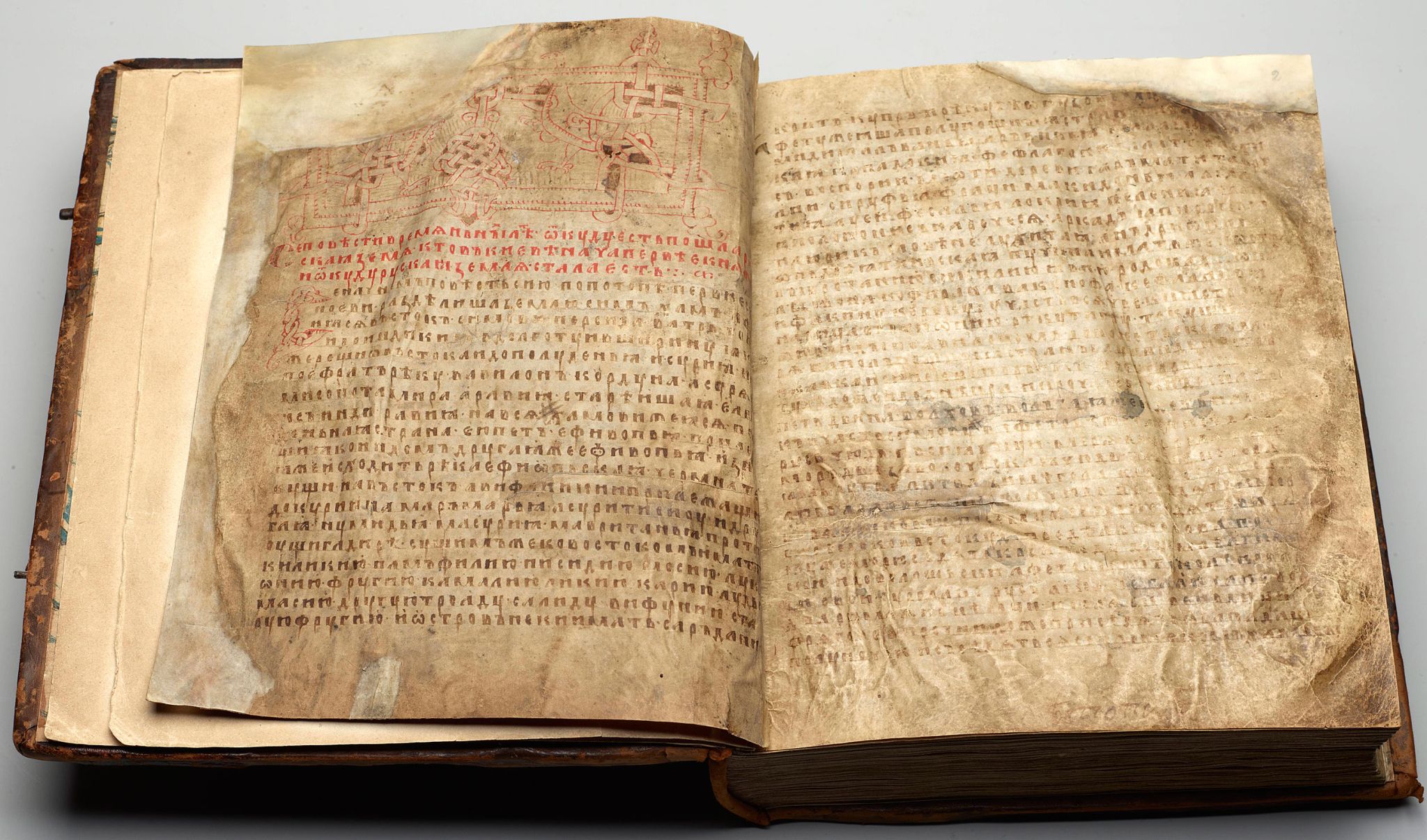
- Photo 1: the opening folios of the Laurentian Codex, held by the National Library of Russia. Notice how environmental conditions have warped the folios and how the text disappears into the binding;
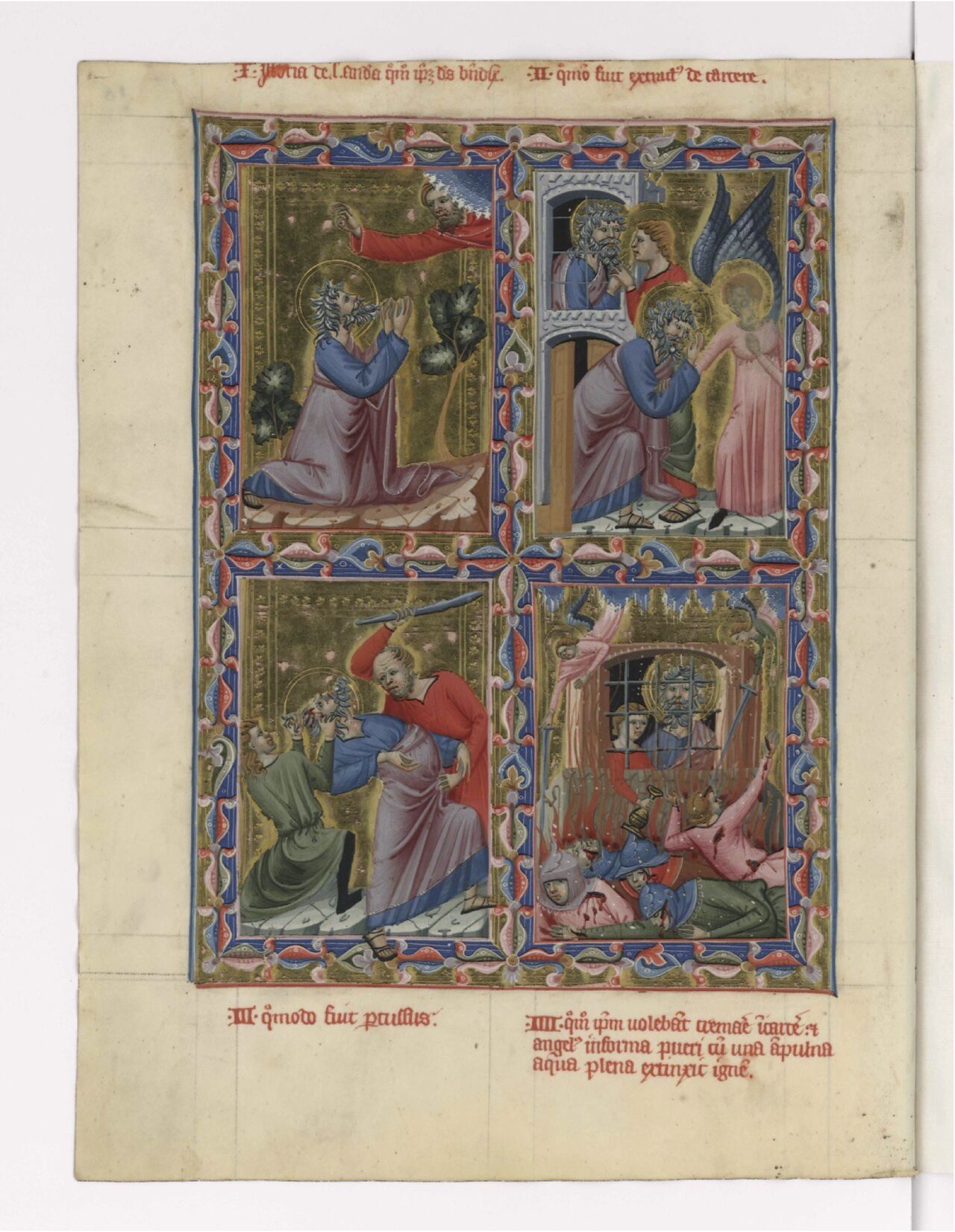
- Photo 2: a scan of a page from one of the manuscripts held by the Vatican Library;
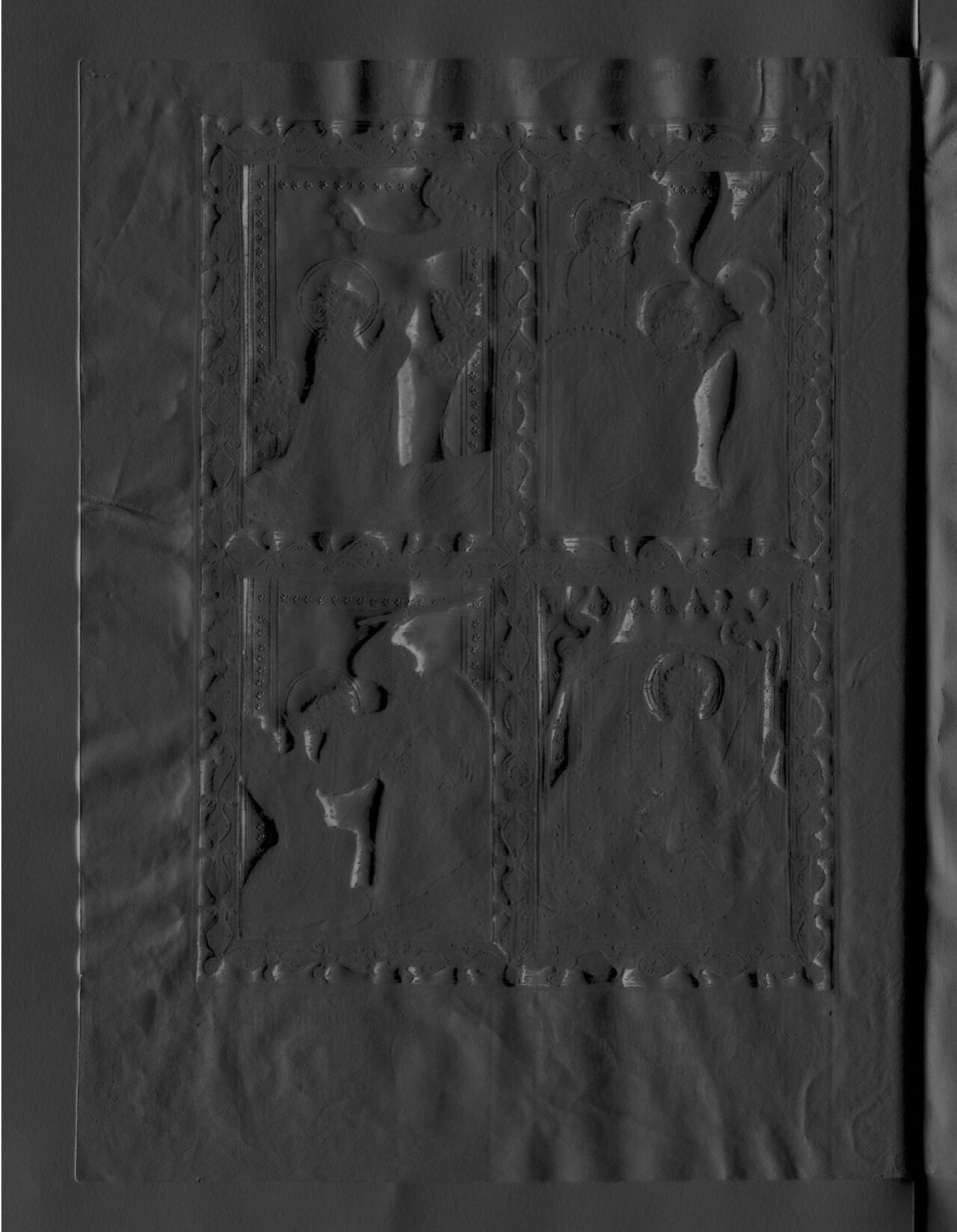
- Photo 3: the same page as in Photo 2, but with all colour removed for clarity. Notice the relief of the surface and how the lighting changes with the angle of the embossing.