AI, Once Again
AI, Once Again
Not long ago, I wrote about taking part in a conference for IT executives organised by the “я-ИТ-ы” community. Last week, I attended an in-person meeting of another community I belong to: Digital Business Leaders.
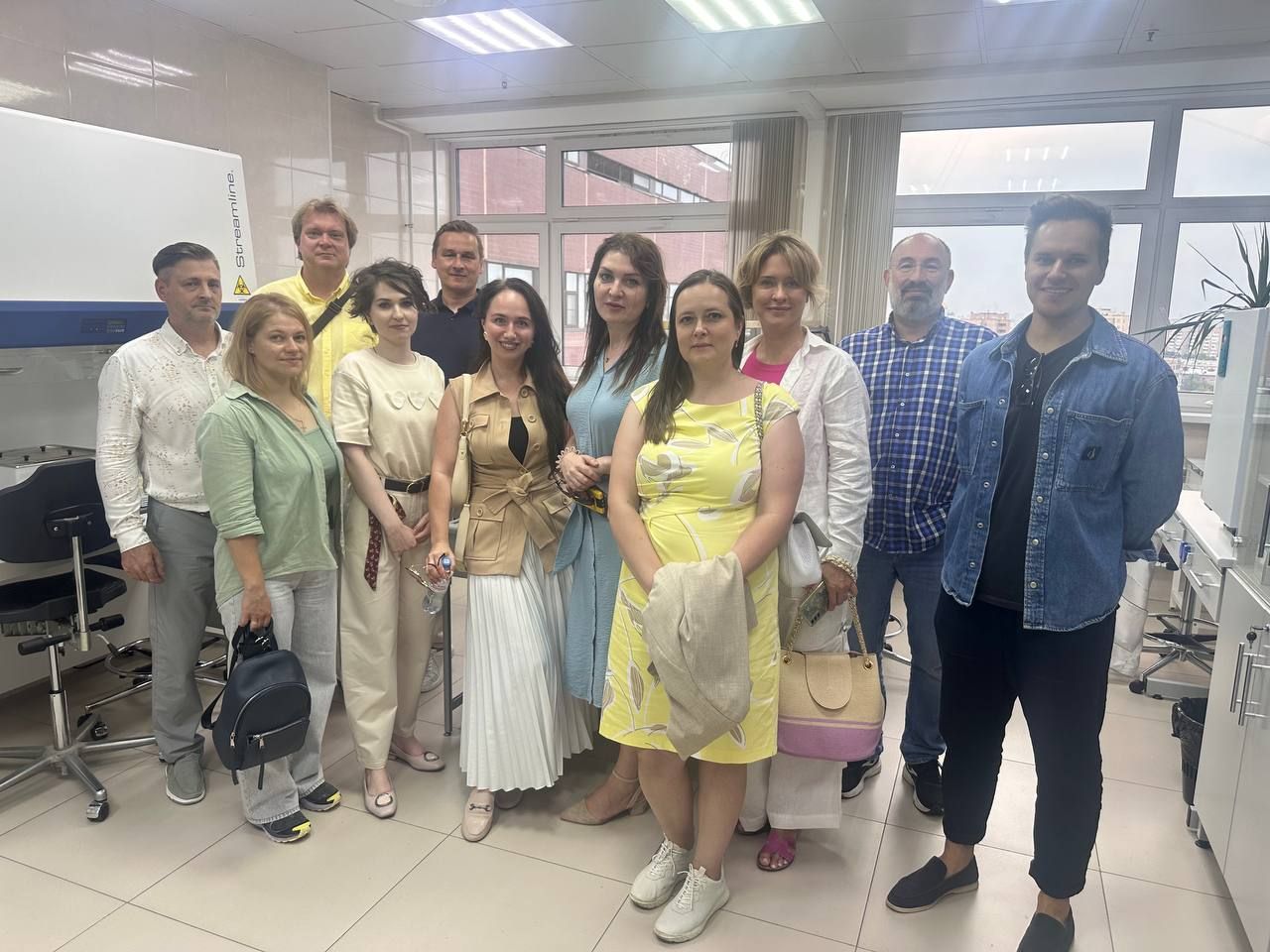
This time, the meeting took place at the Laboratory of Digital Microscopic Analysis at Sechenov University. We learnt a great deal about the laboratory’s work: how it was established, its key areas of development, including digital medicine, how specimens are prepared for microscopic analysis, and how the analysis itself is performed using a digital scanner.
But for me, the most interesting part begins once the data from the digital scanner has been collected.
As Anna Timakova, a researcher at the Laboratory of Digital Microscopic Analysis, explained, at least two types of areas need to be identified in the resulting images: those where everything is fine and those where something is wrong. This is where AI can come to the scientists’ aid.
The key word is can. Before AI can help, it must first learn to distinguish normal areas from abnormal ones. And for that to happen, someone has to annotate an enormous number of images manually. The AI is then trained on this body of labelled data, and only after that can it show the laboratory staff what they should pay attention to.
Anna has spent more than two years working on a joint project with the Ivannikov Institute for System Programming of the Russian Academy of Sciences. In case anyone has forgotten, Victor Petrovich headed my Department of System Programming while I was studying at MSU’s Faculty of Computational Mathematics and Cybernetics.
The Institute’s researchers train various models on images prepared by scientists from the Laboratory of Digital Microscopic Analysis. Together, they then tune the parameters that could improve the AI’s accuracy.
According to Anna’s expert assessment, the proportion of correctly identified areas is around 70–80%. But this figure is constantly changing as the specialists experiment with the models themselves, the images and different approaches to training the AI.
Once again, I came away convinced that AI is not a genie from a magic lamp that will “do everything by itself”, but the result of years of painstaking work by specialists from different fields.
I wish our colleagues at ISP RAS and Sechenov University every success with their project. And a huge thank-you to the organisers of the Digital Business Leaders community for a fascinating tour. I am already looking forward to the next in-person meeting!