Notes in the Margins
Notes in the margins…
Catherine II corresponded with the renowned French writer and philosopher Voltaire. This bolstered her image as an enlightened ruler. After Voltaire’s death, she became afraid that their correspondence would be published, so she decided to buy his entire personal library from his heirs.
The heirs received a very substantial sum, as well as a chest of furs and jewellery and a diamond-encrusted portrait of Catherine II.
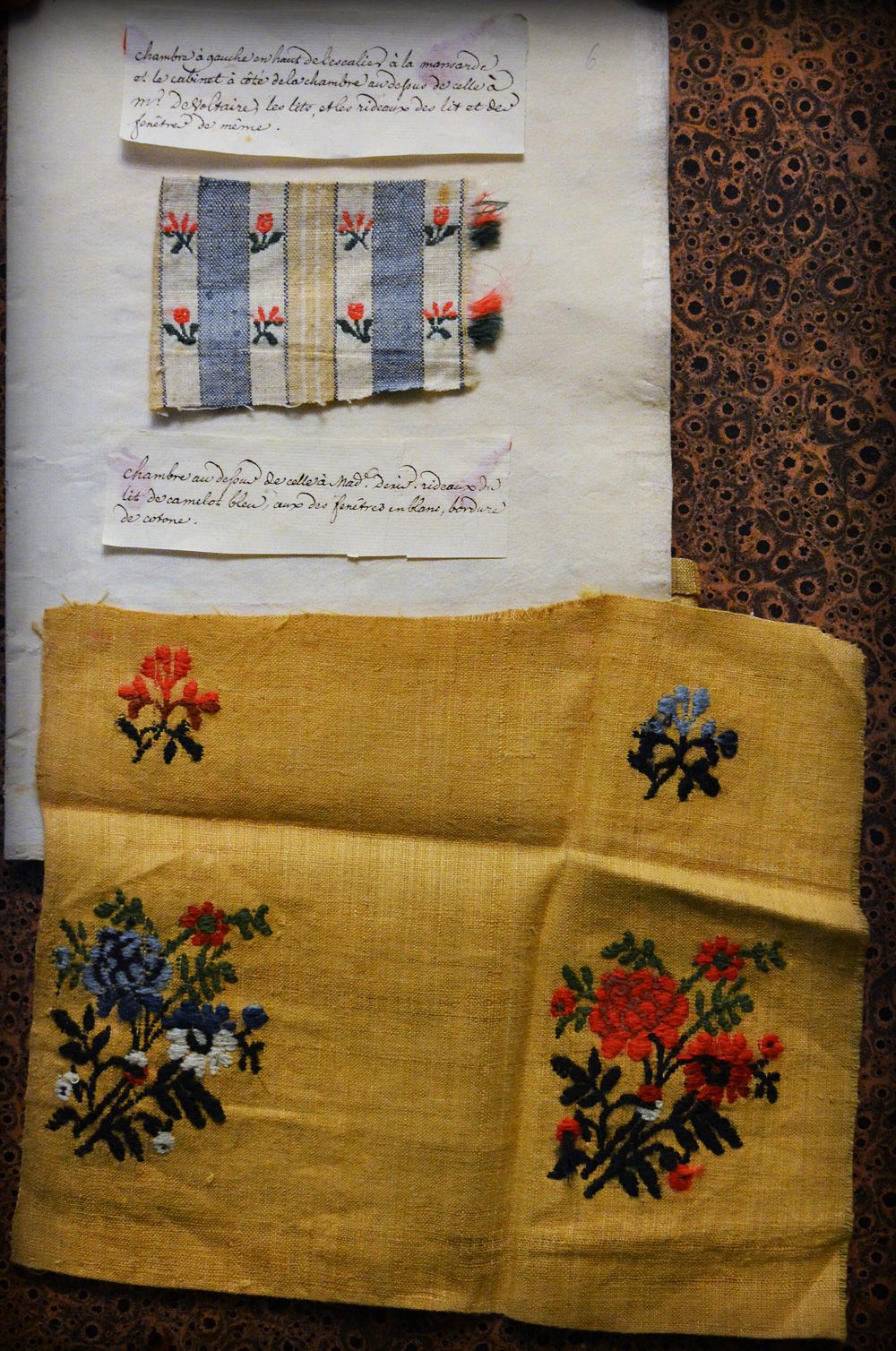
Catherine II wanted to build an exact replica of Voltaire’s château at Ferney – the house on his estate where he spent the final 20 years of his life. Voltaire’s personal assistant did a superb job, compiling an exceptionally detailed catalogue of the library. Detailed plans of the château, images of its rooms and samples of various fabrics – including upholstery for the armchairs and curtains – were also supplied. All this was intended to help with the construction of the replica.
The replica was never built, but the materials proved extremely useful to the French government when it decided to restore Voltaire’s estate in the late 20th century.
The collection of books in Voltaire’s Library is not in itself particularly remarkable, since it is typical of an educated person of that period.
Of enormous interest, however, are the annotations Voltaire made throughout the books as he read. They appear not only in the margins, but also within the text itself, on title pages, endpapers and even bookmarks.
Voltaire’s annotations include assessments of authors, additions and factual corrections. Many are drafts for works he would later write. Written without concern for censorship, these notes reveal the philosopher’s tastes and opinions, not all of which he could express in print.
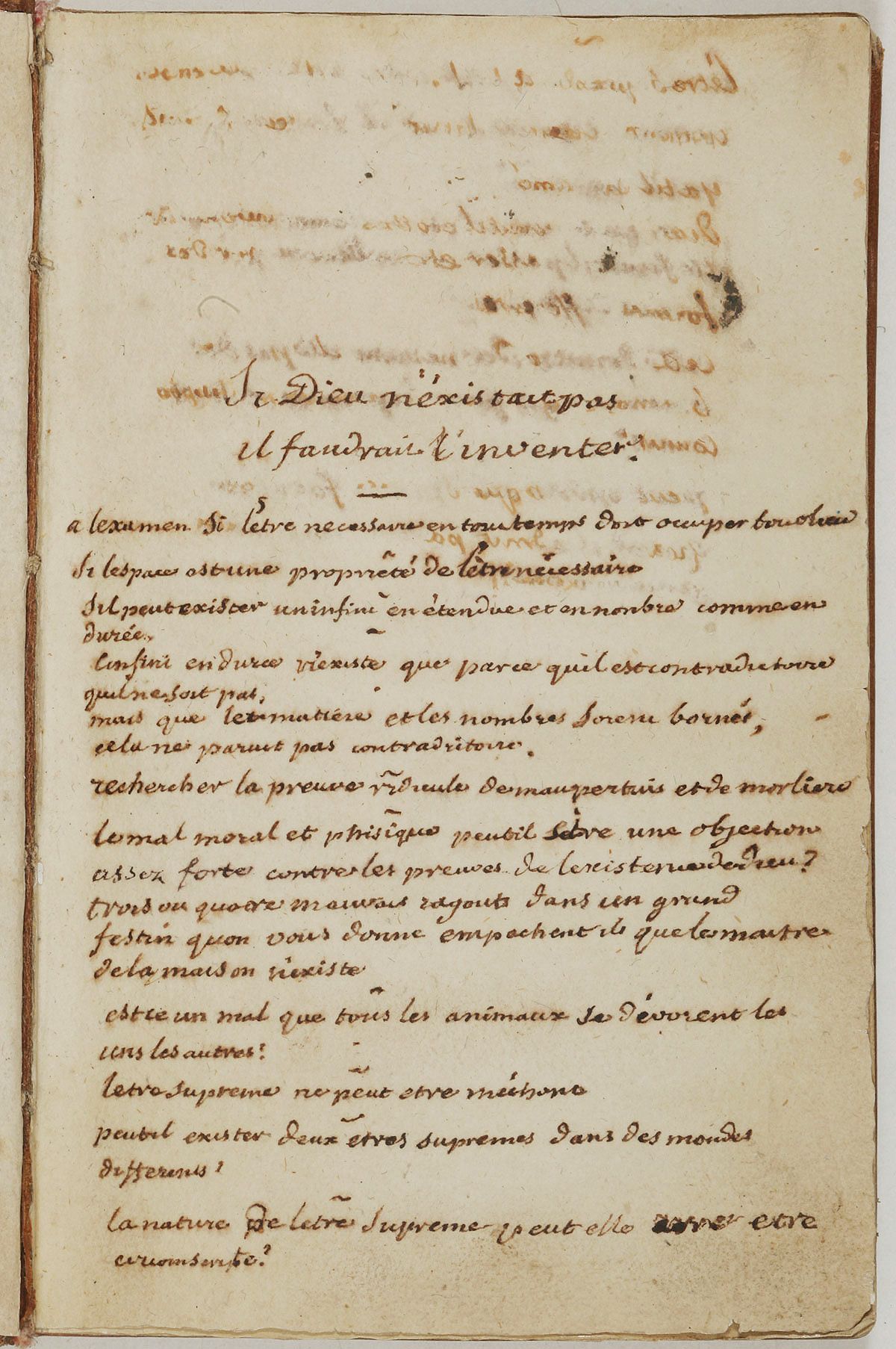
Some of these annotations are now familiar to us as Voltaire’s aphorisms. On the title page of The True Sense of Nature’s System, for example, he wrote: ‘If God did not exist, it would be necessary to invent Him’ (see photos).
Another example from Voltaire’s annotations is: ‘Is it worth getting up in the morning only to talk such nonsense?’
Modern scholars have published entire volumes cataloguing all the annotations in Voltaire’s Library.
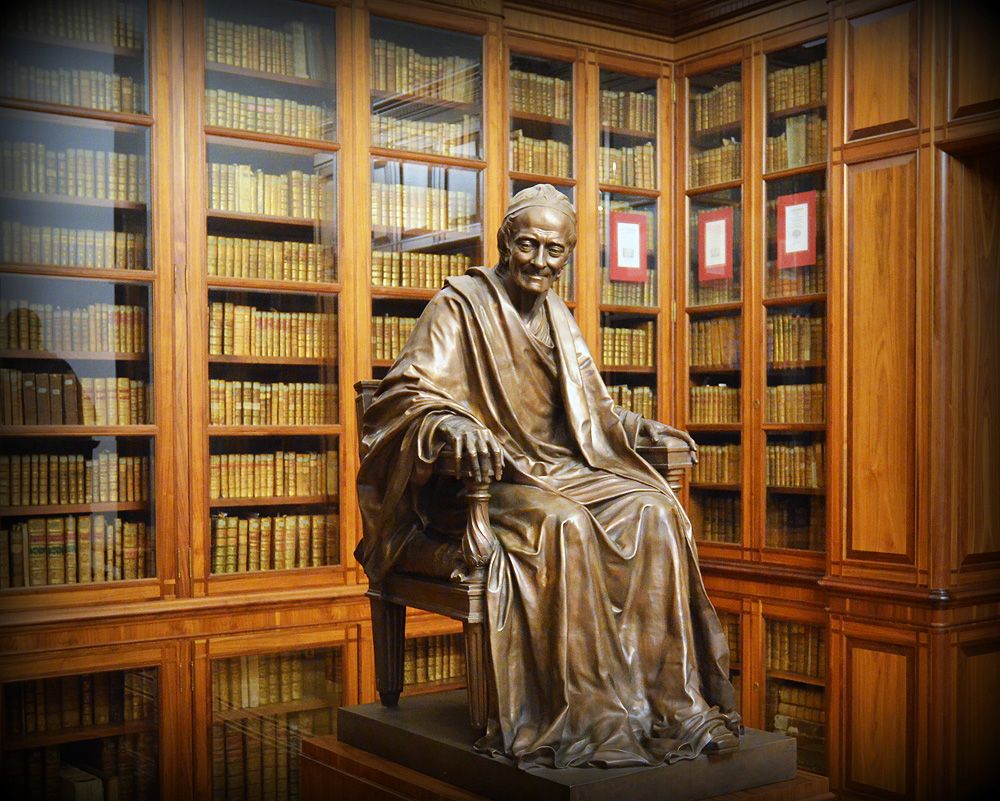
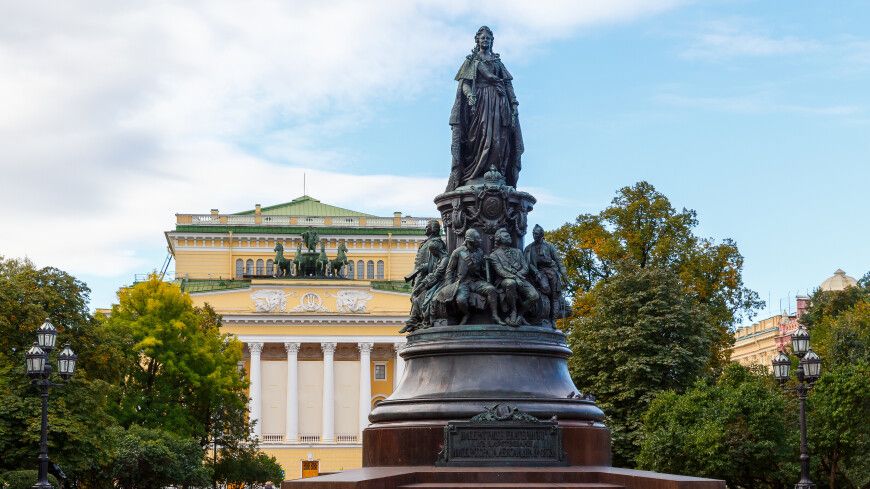
Voltaire’s Library is now housed in a dedicated room at the National Library of Russia. The books are arranged in exactly the same order as they were at the château in Ferney, and a marble statue of Voltaire stands in the centre of the room. Its windows overlook Ostrovsky Square, whose centre is occupied by a monument to Catherine II. On the ‘Mystical St Petersburg’ tour, visitors are told that on the night of a new moon, the statues of Catherine II and Voltaire turn their heads and look at each other.
P.S. Voltaire’s heirs deceived Catherine II – they published her correspondence with Voltaire. But nobody found anything unusual in it.